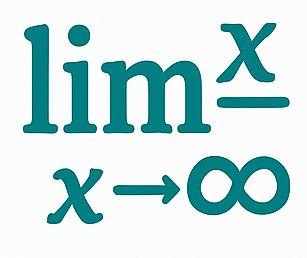
Explained for Beginners: The Difference Between One-Sided and Two-Sided Limits
Learn the difference between one-sided and two-sided limits in calculus with clear explanations, real examples, and comparison tables. Perfect for beginners studying calculus limits.
While learning calculus, there’s a high probability that limits, a core principle in the subject, caught your attention. Functions show very different behaviors at different points, like the boundaries of a point and so many more. However, as you move a bit further, you come to realize that there is not just one type of limit. “In this article, we discuss the difference between one-sided and two-sided limits.
Indeed, there are limits that can be approached from both directions — two-sided limits, and limits that can only come from one vertical side one-sided limits.
So, what difference do one-sided poses and two-sided poses make in calculus? When should you identify one for the other?
In this beginner friendly guide, we are going to break these limits down using their definitions, real and accurate illustrations alongside some tips to help you master them in the most lucid way possible.
🔍 What Is A Limit In Calculus
But before dwelling on one-sided and two-sided limits, let us revisit limits and what they truly entail.
A limit defines the value of a function as the x, or in simple terms the input, is replacing the number in reference.
✅ Two-Sided Limit– What Is It?
A limit that involves both directions is called a two sided limit. It assesses how a function behaves for both sides at a particular point. Simply put, you are approaching the specific value from both directions, and a limit can only exist if the outcomes are identical from both approaches.
✏️ Two-Sided Limit Notation:
lim(x → a) f(x) = LIn this case:
- L is the value that will be approached and returned the same without any jumps in the process.
📌 Primary Condition:
For a limit to exist as a “two-sided limit”, it is necessary and sufficient that the left-hand limit and the right-hand limit exist and are equal to each other.
🔄 What Is A One-Sided Limit?
As the term suggests, a one-sided limit looks at the function from one side as in either the left side or the right side only.
✏️ Notation for One Sided Limits:
- Left-hand limit:
lim (x → a⁻) f(x)(as x approaches a value less than a)
- Right-hand limit:
lim (x → a⁺) f(x)(as x approaches a value greater than a)
When a function acts differently on either side of a point or only defined on a specific side, that results in one-sided limits.
🧠 When Are Limits One-Sided And Why?
One-sided limits come in handy in the following situations:
- When a function is not defined on both sides of a value.
- When a function is experiencing a jump or discontinuity.
- When dealing with piecewise-defined functions.
- In real life where behavior has jumps (e.g., price range, shipping exceptions, and sudden changes of signals).
📊 Visual Example: Step Function
Let’s look at a step function, defined as:
f(x) = {

   1,  if x < 0

   2,  if x ≥ 0

}
Now let’s take a look on the limit as x approaches 0.
- From the left:
lim(x → 0⁻) f(x) = 1- From the right:
lim(x → 0⁺) f(x) = 2Since the values of both limits are not the same:
lim(x → 0) f(x) does NOT exist✅ In this case, one-sided limits exist, but the two-sided limit does not exist due to both values differing.
🧮 Another Example: Rational Function
Let’s try a rational function:
f(x) = (x² - 1)/(x - 1)Let’s determine:
lim(x → 1) f(x)Firstly, solve:
(x² - 1)/(x - 1) = [(x - 1)(x + 1)] / (x - 1) = x + 1 (for x ≠ 1)Now, put in the value:
lim(x → 1) f(x) = 1 + 1 = 2As both sides approach 2, both the right-hand and left-hand limits agree, therefore the two-sided limit exists and is equal to 2.
🚦 Summary: What Is the Difference Between One-Sided and Two-Sided Limits?
| Feature | One-Sided Limit | Two-Sided Limit |
| ———– | —————————————– | ——————————- |
| Views case from | Only right or left side | Both right and left |
| Notation | lim(x → a⁻) or lim(x → a⁺) | lim(x → a) |
| Exists when | Function approaches a value from one side | Both sides approach same value |
| Used to define | Step functions, piecewise, boundaries | Continuous functions |
| Needed in | Real world discontinuities | Smooth curve analysis |
🧠 How To Evaluate One-Sided Limits
Evaluating one-sided limits is just like evaluating regular limits except that you look at x-values only from one side of the target number.
Steps:
- Decide whether you’re coming from negative side (⁻) or positive side (⁺).
- Substitute values just under and above the set point.
- Look For Behavior—Does the function settle at a number or does it shoot to ∞/-∞?
- Graphing or using a calculator is helpful for predicting behavior—especially for complex functions.
📉 One-Sided Limits And Behavior that is Not Bounded
There might be instances where one-sided limits don’t tend toward a specific number, instead increasing without any boundaries.
For example:
f(x) = \frac{1}{(x -2)}- As x approaches 2 from the left side, f(x) approaches negative infinity.
- As x approaches 2 from the right side, f(x) approaches positive infinity.
The limit in this case does not exist.
\lim(x \to 2) f(x)In this case the limit in either direction tends toward infinity, which classifies this is an infinite discontinuity.
This concept demonstrates that both one-sided limits provide useful, accurate information.
📕 Functions Defined by Intervals: A Great Example of One-Sided Limits
Functions defined on several subdomains will often display distinct characteristics on either side of a certain point.
For example:
f(x) = \{
 x^2,  x<1 \newline
 3x-1, x\ge 1
}
Let’s find the limit at x=1.
- From the left side, the function approaches the limit of 1 which equals 1.
- From the right side, the limit equals 3(1)-1 = 2.
So, the two sided limit yields a result that does not exist. However, both one sided limits are valid.
📎 Why Distinction Between One-Sided And Multi-Sided Limits Matter in Calculus
The main reason for adopting multi-sided limits need arises when is:
- In the tests of function continuity. A function remains continuous at a certain point when both one sided limits can be present as equal (or the two sided limit is present).
- In defining derivatives where multi-sided limits are needed.
- Applying limits in class, as well as on standardized tests such as the AP Calculus exam, or during the relevant university-level courses.
In the specific situations of real-world construction or object use: There are multiple parameters that can change at a single point: thresholds of temperature, stock prices, or system overloads.
🤓📆 Teacher Tip: Students can encounter some difficulties with concept traps, so tread carefully.
Some examples of the student’s common errors are:
- Assuming that the two-sided limit exists due to one sided working.
- Not checking both sides while solving for a regular limit.
- Not following the correct definition, including the proper notation for one sided, like + or – signs.
- Defining undefined whereas limit does not exist–doesn’t not equate to one doesn’t always.
🔬 Resources That Could Work For You
To aid in understanding the difference between one-sided limits and two sides, these resources may help:
- Using a graphing calculator, or other tools such as Desmos.
- Work on limits that include step and piecewise functions.
- Use the limit calculator found online. It’s particularly useful for students with computer aided problems.
🛠 Resources
- A two-sided limit doesn’t takes both the left calls and right interactions of a function as an operating cost at that point.
- A one-sided limit and right only call while opposit with left side which defines it’s are considered.
There may be multiple conditions which fulfill existence of two-sided limit: existence of both one-sided limits must exist and equally valid set of values.*
- One-sided limits are important in studying step functions, discontinuities, and piecewise functions.
- Knowing the distinction assists in calculating limits and in more complex problems in calculus where understanding of a function’s behavior is crucial.
🎓 Ready to Practice?
Start refining your skills by trying this out:
f(x) = {

  2x + 1,   if x < 4

  x²,       if x ≥ 4

}

Find:

- lim(x → 4⁻) f(x) = ?

- lim(x → 4⁺) f(x) = ?

- lim(x → 4) f(x) = ?
🔍 Suggested Next Reads:
- 👉 [Solving Limits with Step-by-Step Instructions (Even Using a Calculator)]
- 👉 [Comprehending Continuity: The Time a Function is Smooth versus When it Breaks]
- 👉 [L’Hôpital’s Rule for 0/0 forms and ∞/∞ forms]