
Multivariable Limit Calculator
Understanding multivariable limits is a core part of advanced calculus, yet solving them by hand can be time-consuming and error-prone. That’s where a multivariable limit calculator comes in handy. Whether you’re a student preparing for exams, a researcher working with complex models, or an engineer tackling real-world problems, these tools save time and provide accurate results.
🔎 What Is a Multivariable Limit Calculator?
A multivariable limit calculator is an online tool that evaluates the limit of a function with two or more variables (like x and y, or x, y, z). Unlike single-variable limits, multivariable limits can approach a point from multiple directions, making manual calculations tricky.
For example:
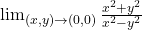
A calculator can quickly solve this by testing different paths and verifying if the limit exists.
📚 Why Multivariable Limits Are Important
Multivariable limits form the foundation for:
- Partial derivatives & gradients – the building blocks of optimization problems.
- Double & triple integrals – used in physics, probability, and fluid dynamics.
- Machine learning optimization – cost functions often involve multiple variables.
- Economics & finance – multivariable functions model supply, demand, and risk factors.
👉 Real-world example: Engineers use stress-strain equations (multivariable functions) to predict how bridges or airplanes will react under pressure. Without limits, you couldn’t analyze the behavior near critical points.
🛠️ What Is a Multivariable Limit Calculator?
A multivariable limit calculator is an online tool designed to evaluate limits of functions with two or more variables. It works by:
- Substituting values near the target point.
- Checking different paths of approach (x-axis, y-axis, diagonal lines, polar coordinates).
- Determining whether the limit exists or diverges.
Some calculators, like WolframAlpha, even provide a step-by-step breakdown and 3D graph visualization so you can see how the function behaves in space.
✅ This not only saves time but also helps you understand the concept visually, which is something pen-and-paper methods often lack.
🧮 Step-by-Step Example Using a Multivariable Limit Calculator
Let’s solve this example:
\[
\lim_{(x,y)\to (0,0)} \frac{x^2+y^2}{x^2-y^2}
\]
Manual Method:
- Approach along the line y=0y=0y=0:
\[
\frac{x^2 + 0}{x^2 – 0} = 1
\]
- Approach along the line x=0x=0x=0:
\[
\frac{0 – y^2}{0 + y^2} = -1
\]
Since the results differ, the limit does not exist
Calculator Method
- Enter
(x^2 - y^2)/(x^2 + y^2) - Specify
limit as (x,y) → (0,0) - Get result: Does not exist
This demonstrates how quickly a calculator can confirm your manual work.
👉 Pro tip: Always try solving manually first, then verify with a calculator. This improves your exam readiness.
Real-World Applications of Multivariable Limits
- Physics: Modeling wave functions, thermodynamics, fluid flow.
- Engineering: Stress analysis in civil and mechanical structures.
- Computer Science: Optimization algorithms in machine learning.
- Economics: Risk modeling with multiple changing variables.
- Biology: Population models with interacting variables (predator-prey dynamics).
❓ FAQs About Multivariable Limit Calculators
Final Thoughts
A multivariable limit calculator is more than just a shortcut—it’s a learning tool. It helps you visualize, practice, and confirm results, making tough calculus problems manageable. But remember: the real power lies in understanding the why, not just the what. Use calculators wisely, and you’ll not only score better in exams but also strengthen your analytical problem-solving skills.